
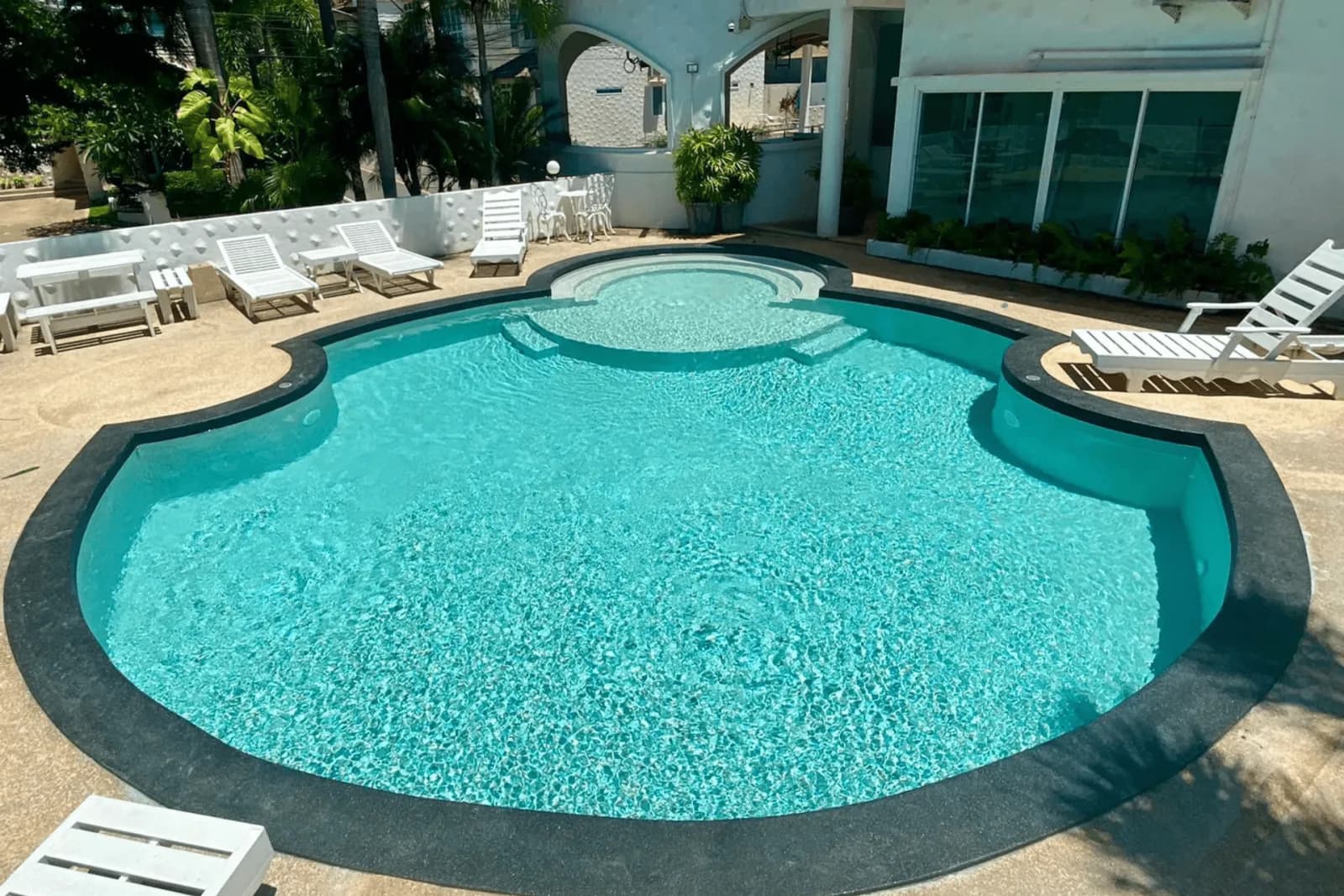
Pool resurfacing is the process of repairing and renewing the pool surface to protect the underlying pool shell and restore the safety, durability, and performance of a swimming pool. It involves removing damaged or worn layers and applying a new surface finish such as plaster, pebble, or other suitable materials.
In tropical locations like Thailand, Pool Resurfacing services is essential because heat, humidity, UV exposure, and heavy rainfall place constant stress on concrete pools, fibreglass pools, and vinyl systems, increasing the risk of cracks, leaks, algae growth, and structural damage if the surface is left untreated.
Many pool owners delay resurfacing because the pool still looks usable or because the damage seems minor. Unfortunately, waiting too long often turns a manageable resurfacing job into expensive pool repair, structural damage, or even full replacement of the entire pool.
Understanding the risks early can help homeowners protect their investment, avoid unnecessary costs, and maintain a safe environment for family, pets, and guests.
Why Pool Resurfacing Should Never Be Delayed
A pool surface acts as a waterproof barrier. Once it begins to fail, water penetrates behind the plaster or pebble layer and starts attacking the structure itself. Delaying resurfacing rarely saves money in the long run.
In fact, the longer you wait, the faster costs escalate due to compounding damage.
Key Risks of Delaying Pool Resurfacing
Hairline Cracks Become Structural Cracks
Small hairline cracks in plaster or pebble finishes are often dismissed as harmless. Over time, these cracks widen and allow water to reach the concrete shell. Once moisture reaches the steel reinforcement inside the pool, rust begins to form. As rebar corrodes, it expands and breaks through concrete, leading to severe structural damage.
At this stage, resurfacing alone is no longer enough.
Loose Plaster Leads to Water Loss and Equipment Damage
As plaster deteriorates, it begins to flake and separate from the surface. This debris does not just look unsightly. It clogs filters, damages pump impellers, and forces pool equipment to work harder.
A worn surface also becomes porous, allowing constant hidden water loss. Many homeowners only notice the problem when water bills rise or circulation efficiency drops.
Rough Surfaces Create Safety Hazards
Delayed resurfacing causes the pool surface to become rough and pitted. This leads to cuts, scratches, and abrasions for swimmers, especially children and pets. Loose tiles, broken edges, and uneven surfaces also increase slip and fall risks.
From a safety standpoint, ignoring surface deterioration can turn a pool into a liability rather than a leisure asset.
Chemical Imbalance and Algae Growth Increase
Old, porous surfaces absorb chemicals rapidly. This makes it difficult to maintain balanced water chemistry and leads to excessive chlorine and acid use. As chemicals struggle to stabilise, algae and bacteria thrive in cracks and rough areas.
Poor water quality not only affects comfort but accelerates surface decay even further.
Permanent Stains and Visual Decline
Minerals, organic matter, and debris bond deeply with aging surfaces. Over time, stains become impossible to remove without resurfacing. A pool with persistent staining looks dirty even when clean, reducing visual appeal and overall property value.
For villas and rental properties, visible pool damage can deter buyers, renters, and guests.
Regional Risks in Tropical Climates
In coastal areas such as Phuket, resurfacing delays are especially risky. Heat, UV exposure, salt in the air, and intense rain cycles accelerate deterioration of plaster, pebble finishes, and fibreglass pools.
Many pools in Thailand degrade faster than expected because materials not suited for tropical conditions were used during construction or renovation.
Why Professional Resurfacing Matters
Hiring a professional resurfacing company is critical. Poor adhesion, incorrect surface preparation, or the wrong materials can cause new finishes to fail prematurely.
Professional resurfacing delivers:
- Proper surface diagnosis before work begins
- Correct preparation of concrete and existing layers
- Strong adhesion for the new layer
- Reduced future maintenance needs by up to 50 percent
- Longer lifespan for plaster or pebble finishes
Resurfacing is often simpler and more cost effective than homeowners expect, especially when handled early.
How Often Should a Pool Be Resurfaced?
Most pools should be resurfaced every 7 to 15 years depending on material, usage, and maintenance quality. Concrete pools with stable structures can usually be resurfaced even when they appear old or heavily stained.
Waiting beyond this window dramatically increases the risk of spalling, delamination, leaks, and rebar exposure.
Cost Implications of Waiting Too Long
A simple resurfacing job costs far less than repairing broken structural concrete or replacing burst plumbing lines. As damage progresses, costs rise quickly due to:
- Structural repairs
- Waterproofing failures
- Equipment replacement
- Tile separation and delamination
Delaying resurfacing often transforms routine maintenance into major renovation work.
Choosing the Right Pool Finish
Pool owners typically choose between plaster, pebble finishes, and glass tile. Each option has different maintenance demands and durability levels.
Pebble finishes are increasingly popular in Thailand because they are less porous, resist algae growth, and tolerate chemical imbalance better than plaster.
Choosing the right material from the start significantly affects long term performance and maintenance costs.
Work With the Right Pool Professionals
Not all contractors have the expertise to resurface a pool correctly. Selecting a qualified Pool Contractor Phuket homeowners trust ensures the job is done properly, safely, and with long term performance in mind.
A reliable contractor will inspect the pool shell, identify underlying issues, explain repair options clearly, and provide warranty support after completion.
You can explore professional pool resurfacing services in Phuket designed specifically for tropical conditions and long term durability.
Final Thoughts and Next Steps
Delaying pool resurfacing is rarely a harmless decision. What begins as small cracks, stains, or roughness can quickly escalate into leaks, safety hazards, and major structural damage.
Timely resurfacing protects the pool surface, preserves the shell, reduces maintenance costs, and safeguards property value. Acting early almost always saves money and prevents disruption.
If your pool shows signs of wear, inspecting it now can prevent far more expensive repairs later.
Frequently Asked Questions
What happens if you delay pool resurfacing too long?
Delaying resurfacing allows cracks to grow, causes water loss, increases algae growth, damages equipment, and can lead to severe structural damage.
Is pool resurfacing cheaper than major repairs?
Yes. Resurfacing costs far less than repairing structural concrete or replacing a damaged pool.
How often should a swimming pool be resurfaced?
Most pools should be resurfaced every 7 to 15 years depending on material, usage, and maintenance.
Can old concrete pools still be resurfaced?
Yes. Most concrete pools can be resurfaced if the structure is stable.
Does resurfacing improve pool safety?
Yes. A new, smooth surface reduces cuts, slips, and algae growth, making the pool safer for swimmers and pets.
Written by Lewis Jones, Director of Paradise Pool Interiors — the sole licensed PebbleTec applicator in Thailand.